


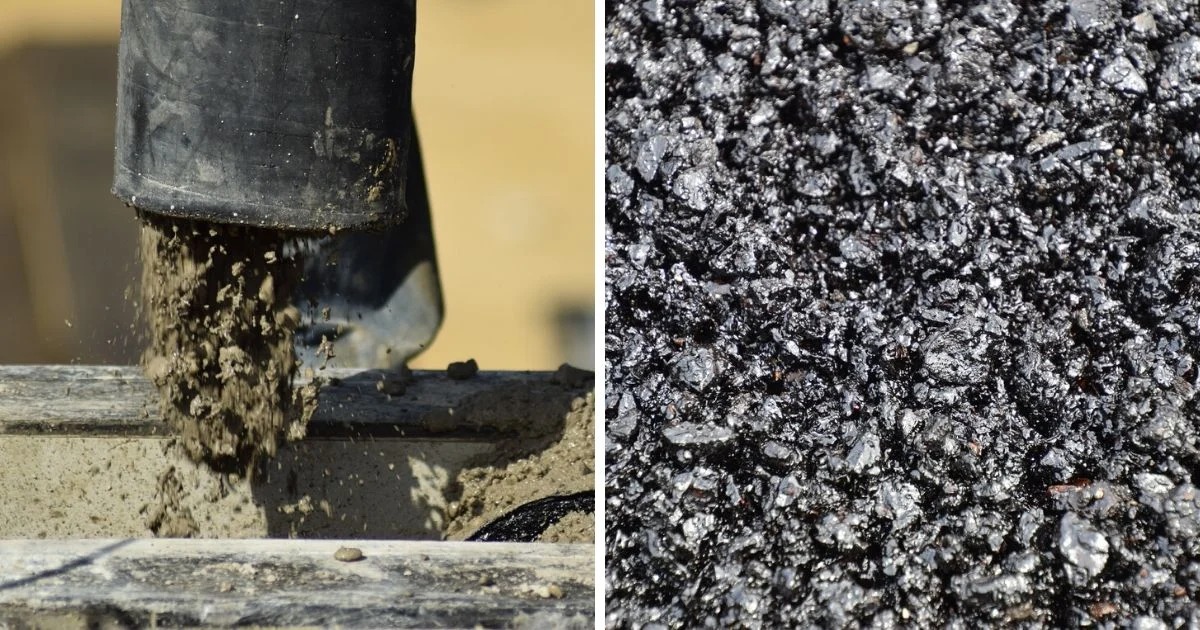
When planning a paving or site improvement project, one of the most important decisions you’ll make is choosing between concrete and asphalt. While both materials are widely used, each performs differently depending on traffic load, environment, budget, and long-term expectations.
Understanding these differences upfront helps prevent premature repairs, unexpected maintenance costs, and performance issues down the line.
Concrete: Built for Longevity and Strength
Concrete is known for its durability and long service life. It performs especially well in areas that experience heavy loads, frequent use, or require minimal maintenance over time.
Key benefits of concrete include:
- Long lifespan with proper installation
- High load-bearing capacity
- Low routine maintenance
- Reflective surface that improves visibility and reduces heat absorption
- Design flexibility with finishes, textures, and color options
Because of its strength and stability, concrete is often selected for commercial properties, high-traffic areas, loading zones, and long-term infrastructure projects.
Asphalt: Efficient, Flexible, and Cost-Effective
Asphalt is valued for its faster installation time and lower upfront cost. It’s a practical option for projects that require quick turnaround or where flexibility is important.
Advantages of asphalt include:
- Faster installation and curing
- Lower initial cost
- Smooth surface that absorbs noise
- Flexibility that helps reduce cracking from temperature changes
Asphalt is commonly used for driveways, parking areas, and roadways where speed of installation and short-term cost efficiency are priorities.
Comparing Durability, Maintenance, and Cost
When choosing between concrete and asphalt, consider the full lifecycle of the material—not just the initial price.
- Concrete typically lasts longer and requires less frequent maintenance but has a higher upfront cost.
- Asphalt is more affordable initially but often requires periodic sealing, resurfacing, and eventual replacement.
Environmental exposure, traffic volume, drainage conditions, and intended use all play a role in determining which option will perform best over time.